Can you get a business loan with no personal guarantee?
By
Aurora Capital
June 4, 2026

.svg)
.svg)
For many UK small business owners and limited company directors, borrowing isn’t just about the rate or the speed – it’s about risk. If you’re looking for funding to buy stock, pay suppliers, or smooth cash flow, a personal guarantee can feel like a big step because it can put your personal assets on the line if the business isn’t in a position to repay.
That’s why more SMEs are exploring business loans with no personal guarantee: funding options that may support day-to-day trading needs without requiring the director to personally underwrite the debt. In this guide, we’ll explain how these loans work, when they’re available and what to consider if you’re weighing up your options against other forms of trade and working capital finance.
What is a personal guarantee on a business loan?
A personal guarantee is a legal commitment from a director or shareholder who agrees to take personal responsibility for repaying some or all of the loan in the event that the business can’t.
For lenders, a personal guarantee reduces risk. For directors, it increases personal exposure – which is why it’s an important decision to understand fully.
Why do lenders ask for personal guarantees?
A limited company is a separate legal entity. If the company fails, the lender’s ability to recover funds can be restricted, especially with unsecured borrowing. A personal guarantee is one way a lender protects themselves, particularly if:
- The business is young or has limited trading history
- Cash flow is inconsistent or seasonal
- The loan is large relative to turnover
- The business has limited assets
- The lender is offering unsecured funding
What does a personal guarantee cover?
This varies by lender and agreement. Some guarantees cover 100% of the outstanding balance. Others are limited to a percentage. Some include enforcement costs. It’s one of the reasons you should always read the terms carefully and ensure you understand the extent of liability.
Why is matters for day-to-day cash flow borrowing
Many businesses borrow for perfectly sensible reasons, such as buying inventory, paying suppliers, bridging payment terms or smoothing seasonal dips. Trade finance exists for exactly these situations – helping businesses keep trading when cash is tied up in stock cycles or long payment terms.
If the borrowing is genuinely short-term and tied to trading activity, you may prefer funding that doesn’t require a personal guarantee, particularly if the business can demonstrate strong trading and clear repayment routes.
Are no personal guarantee loans harder to get?
Often, yes. A lender offering business loans without a personal guarantee is taking on more risk. Especially if the facility is unsecured. That usually means they’ll look more closely at:
Trading performance and affordability
Lenders want to see that the business can comfortably service repayments from cash flow. Consistent revenue and health margins help.
Time in business
Longer trading history can reduce perceived risk. A well-established business may be more likely to access limited company loans with no personal guarantee than a new venture.
Purpose of funds
A clear, sensible use case matters. Especially when it’s tied to trading. Funding to purchase stock, pay suppliers or manage predictable cash flow timing gaps is easier to justify than vague reasons tied to general working capital.
Business credit profile and records
Strong, accurate financial records reduce friction. One of the biggest contributing factors to a successful application is having your documents ready and your application consistent, because delays often come from missing information.
Security (even without a personal guarantee)
Many no personal guarantee options still involve security at the business level, such as a charge over assets or a facility linked to assets or receivables. That’s one reason trade and working capital funding can sometimes be structured without a personal guarantee – the lender can assess and monitor the underlying assets or revenue streams.
Get a free, no obligation quote
Apply in minutes, there’s no impact on your credit score and you’ll get a free, no obligation personalised quote in hours. Regulated by the FCA: 831395
How much would you like to borrow?
Thank you! Your submission has been received!
Oops! Something went wrong while submitting the form.
Prefer to talk? Call us on 01371870815
How the process works
[1]
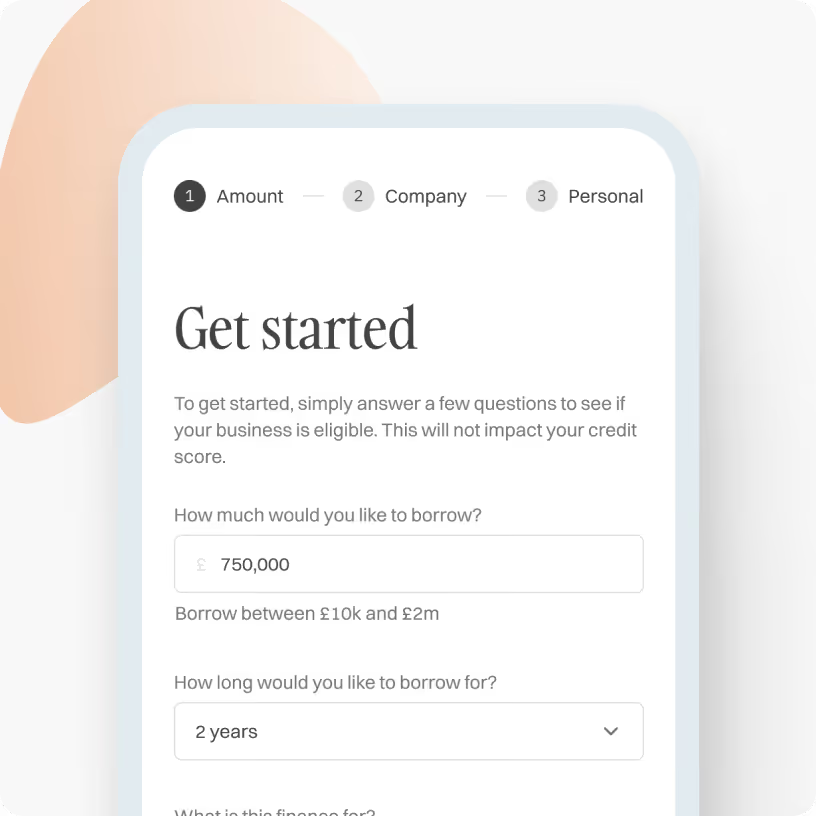
Enquire and check eligibility
Enquire in under 30 seconds to find out if your business is eligible for funding. We only need basic information about your business.
Check eligibility now
[2]
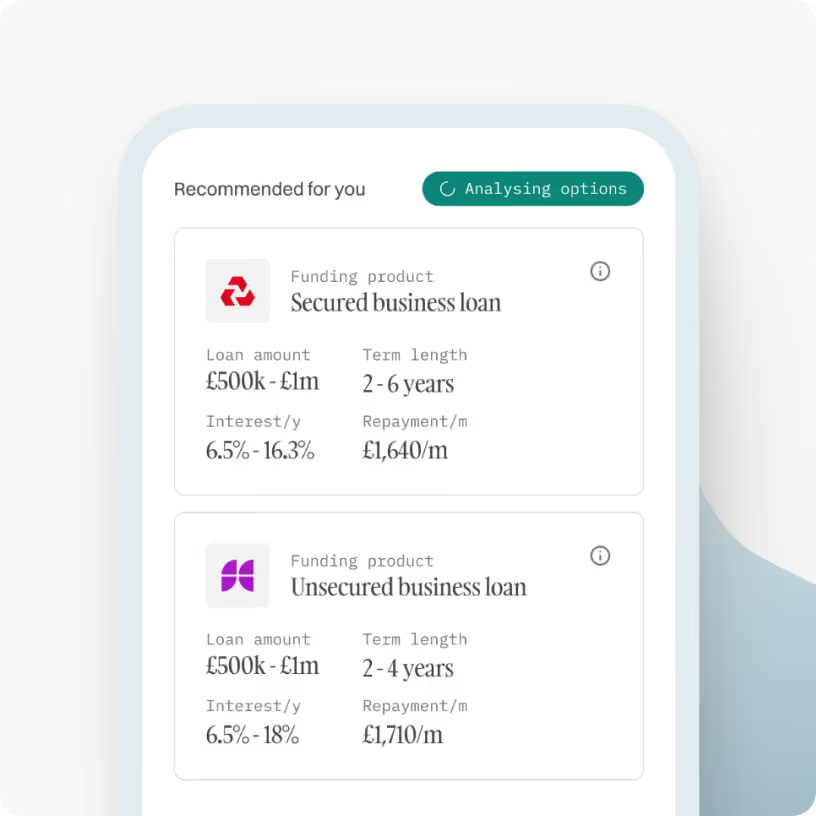
Get matched to lenders
Our LendTech technology will compare over 50 lenders and match you with the most suitable finance options.
Check eligibility now
[3]
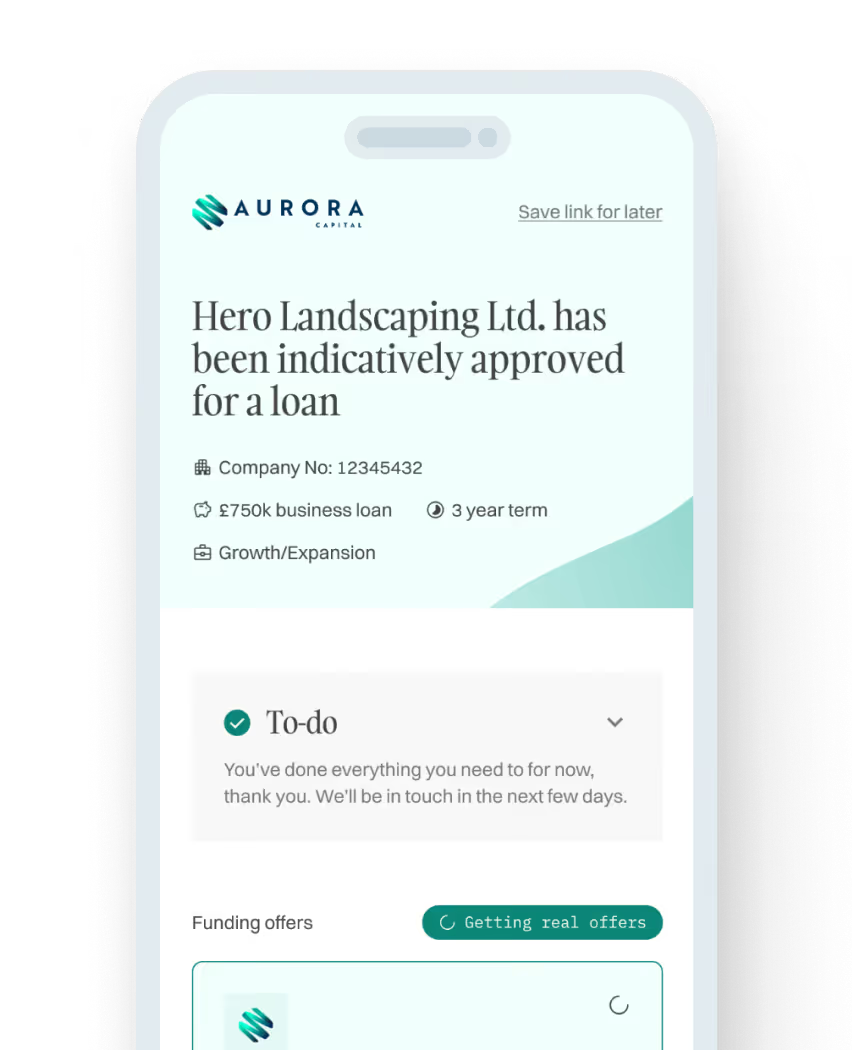
Obtain funding in 48 hours
Once you have fully submitted your proposal, one of our funding specialists will discuss the available options and help get you funded.
Check eligibility now

Frequently asked questions
Do no personal guarantee business loans have higher interest rates?
They can, but not always. Pricing is usually based on risk. If a lender doesn’t have a director guarantee to fall back on, they may price the facility higher to compensate. But your rate will still depend on:
- Your trading history and affordability
- The funding amount and term
- Whether the facility is secured at the business level
- The lender’s model e.g. fixed loan vs revolving facility vs asset-linked funding
It’s also worth remembering that the headline rate isn’t necessarily the whole story. When comparing options, don’t forget to look at:
Total cost and repayment
A slightly higher rate may still be the better option if it protects cash flow and keeps repayments manageable.
Flexibility
Some facilities are designed so you only borrow what you need, when you need it. Which can be more cost-effective than taking a lump sum and paying interest on all of it from day one.
Speed to access funds
If timing matters, there’s value in a solution that can be arranged quickly. Many applications can be decided within 24–48 hours when the case is straightforward, and documents are ready.
What are the alternatives to a personal guarantee?
1) Security held within the business
Some lenders may accept security at company level – such as a debenture – rather than a director guarantee. Secured business loans can be more appropriate when the borrowing supports trading activity and the business has assets to use.
2) Asset-linked funding
Trade finance is frequently structured around the reality of trading. Stock goes out. Invoices go out. Payments come in later. Trade loans can be linked to assets like invoices, inventory or equipment – and the available funding can scale with trading and asset values.
This matters because if a lender can rely on business assets or receivables – and monitor them – they may be able to reduce reliance on a personal guarantee.
3) Revolving facilities and lines of credit
For businesses dealing with supplier payments and stock cycles, a revolving credit facility can be an alternative to a fixed-term loan. It lets you draw, repay and redraw as needed – which can be useful when cash flow timing is the problem, not profitability.
4) Revenue-linked funding
Some funding types like merchant cash advances are repaid via a percentage of takings, which can reduce pressure during quieter periods. Merchant cash advances are a particularly fast option for businesses taking card payments.
5) Invoice finance or receivables funding
If your biggest challenge is customers paying slowly, invoice finance can unlock cash that’s already “earned” but not yet received. This can directly support paying suppliers, purchasing stock, and bridging payment terms.
6) Smaller loan amount, shorter term, stronger documentation
Sometimes the practical alternative is to reduce the risk profile. Borrow less, over a shorter period, with a clear purpose and stronger evidence. It sounds simple, but it can be the difference between a lender insisting on a personal guarantee or being comfortable without one.
Can start-ups get business loans without a personal guarantee?
It’s possible, but it’s usually harder.
Start-ups typically have limited trading history, which makes affordability and repayment confidence harder for lenders to assess. That’s why many lenders will either request a personal guarantee or offer smaller amounts, shorter terms, or different funding structures.
However, there are still routes that can work for early-stage businesses, especially when the funding is tied to trading activity:
If you have strong contracted revenue or purchase orders
Even if you’re early in your trading journey, if you can demonstrate reliable incoming revenue some lenders may consider options that reduce reliance on a personal guarantee.
If the funding is supported by assets
If you have equipment, inventory or receivables that can support the facility, asset-linked options may be more realistic than a purely unsecured loan.
If the need is trade-related and time-sensitive
Start-ups often need funding for stock and suppliers to fulfil demand. Trade finance exists to bridge that timing gap – paying suppliers and purchasing inventory while you wait for sales to convert into cash.
If you can show you’re organised and lender-ready
The fastest approvals tend to come when the application is clear, accurate, and supported by up-to-date documents. Having recent bank statements and key documents ready, being clear on the purpose of funds, and submitting promptly can make a major difference.
Is a business loan with no personal guarantee right for my business?
Ultimately, business loans with no personal guarantee can be a great fit for UK SMEs that want to protect personal assets while still accessing funding to keep trading smoothly. The key is understanding what lenders need to see: strong, consistent trading, clear affordability, and a sensible reason for borrowing – whether that’s purchasing stock, paying suppliers, or smoothing a short-term cash flow gap.
It’s also worth remembering that “no personal guarantee” doesn’t always mean “no security”. Some lenders may look for reassurance in other ways, such as business-level security, asset-linked structures, or facilities that flex with your revenue. If you’re comparing business loans without a personal guarantee against other options, focus on the overall fit – cost, speed, repayment terms, and how well the funding matches your trading cycle.
If you’re unsure where you sit, start by getting your documents in order and clarifying what the money is for. The clearer your case, the more likely you are to secure the right funding on the right terms.
Don’t see your question? Send us a message or call us on 01371870815 to speak to one of our funding specialists quickly.
Compare business funding options today, quickly and easily
Browse our range of business funding options to find out more and discover the one that best suits your business.
Compare funding options
Prefer to chat? Call us on 01371870815 to speak to our experts.

.svg)