What are business overdrafts?
By
Aurora Capital
June 4, 2026

.svg)
.svg)
Cash flow is one of the biggest day-to-day challenges for UK small businesses. You can be profitable on paper, but still feel squeezed when VAT is due, suppliers need to be paid, or customers take 30, 60, or even 90 days to settle invoices.
That’s where business overdrafts often come into the conversation. A business bank overdraft can give you short-term breathing room when money is going out before it comes back in.
Overdrafts can be useful in the right context. But they aren’t always the most flexible or scalable option, especially if your business is growing, needs predictable funding, or wants clearer repayment terms.
A flexible buffer for your business expenses
A business overdraft is a line of credit attached to your business bank account that allows you to spend more than the available balance, up to an agreed limit.
In simple terms, it’s a buffer. If your account balance is £0 and you have a £10,000 overdraft limit, you may be able to make payments or cover direct debits up to -£10,000, depending on your bank’s terms and how the overdraft is set up.
Business overdrafts are typically designed for short-term working capital needs, not long-term investments. They’re often used to cover timing gaps, like:
Paying suppliers before customer payments arrive
Covering payroll when an invoice is overdue
Dealing with a one-off expense or seasonal lull
Because the overdraft sits inside your bank account, it can feel like a simple option. But “simple to access” isn’t the same as “best fit”. Especially once you factor in cost, limit changes and how quickly your needs may outgrow it.
How do business overdrafts work?
A business overdraft works as a revolving facility. Simply dip into it when needed and repay it as cash comes in, then use it again later.
Agreed vs unarranged overdraft
Most banks distinguish between:
Arranged/agreed overdraft: a pre-approved limit with known pricing and terms.
Unarranged overdraft: using funds beyond your balance without prior agreement. Often a more expensive and riskier option.
If you rely on an overdraft for business, it’s usually better to have an arranged facility. It’s more predictable and reduces the risk of fees or declined payments when your balance is tight.
Interest and charges
Overdraft pricing varies. Some banks charge interest on the overdrawn amount. Others may apply fees depending on usage, limits or account terms. That’s why comparing both business overdraft interest rates and any additional charges matters.
A balance of risk and reward
Overdrafts often feel like a convenient safety net because:
They sit in your bank account
There’s no separate repayment schedule
You can use them quickly without reapplying each time
But the trade-off is that overdrafts are often less structured than other options. If your business starts leaning on the overdraft month after month, that may be a sign you need a more scalable working capital facility. Not just a temporary buffer.
What types of business overdrafts are there?
There are a few common ways business overdrafts show up in the UK.
Standard business bank overdraft
This is the most common form. It is an arranged limit linked to your business current account, typically agreed with your bank.
Temporary or seasonal overdraft increase
Some businesses agree a higher overdraft during seasonal peaks. For example, ahead of Christmas for retail, or during busy periods for wholesalers. The risk is that if the increase is removed, your business can be left exposed if cash flow hasn’t normalised.
Secured vs unsecured overdraft
Some overdrafts are effectively unsecured, while others may be supported by business assets or guarantees, depending on the bank’s terms and your company profile.
This is where comparisons start to matter. If you’re being asked for security or paying high fees, it may be worth exploring other working capital options that offer clearer terms and better scalability.
When do businesses use overdrafts?
Business overdrafts tend to work best when the need is short-term and predictable.
Managing short cash flow gaps
If you have a consistent timing gap – for example, suppliers get paid weekly but customers pay monthly – an overdraft can help smooth the curve.
Covering unexpected costs
A surprise bill, an urgent repair or a delayed payment can create a short-term squeeze. An overdraft can help you avoid disruptions.
Bridging between stock purchasing and sales
Some businesses use overdrafts to purchase stock or materials when demand is predictable but cash is temporarily tied up.
That said, overdrafts are not always a great fit for stock-heavy businesses with long cycles. If you’re frequently dipping into the overdraft to fund inventory, you may benefit more from a trade or working capital facility built around the reality of trading: stock out, invoices out, payments later.
Things to remember
Business overdrafts can be a helpful tool in the right context, but they’re not always the most flexible or scalable option for growing UK SMEs. If your overdraft is doing heavy lifting, or if you’re comparing business overdraft interest rates and wondering whether it’s still good value, it may be time to explore more structured alternatives like revolving credit facilities, business loans or invoice finance.
Get a free, no obligation quote
Apply in minutes, there’s no impact on your credit score and you’ll get a free, no obligation personalised quote in hours. Regulated by the FCA: 831395
How much would you like to borrow?
Thank you! Your submission has been received!
Oops! Something went wrong while submitting the form.
Prefer to talk? Call us on 01371870815
How the process works
[1]
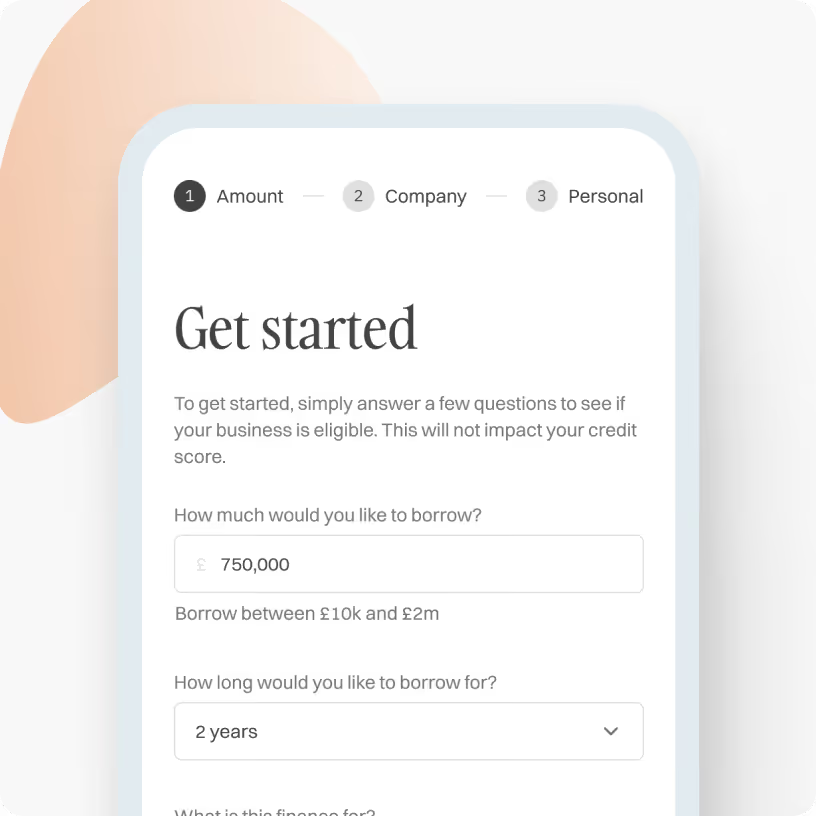
Enquire and check eligibility
Enquire in under 30 seconds to find out if your business is eligible for funding. We only need basic information about your business.
Check eligibility now
[2]
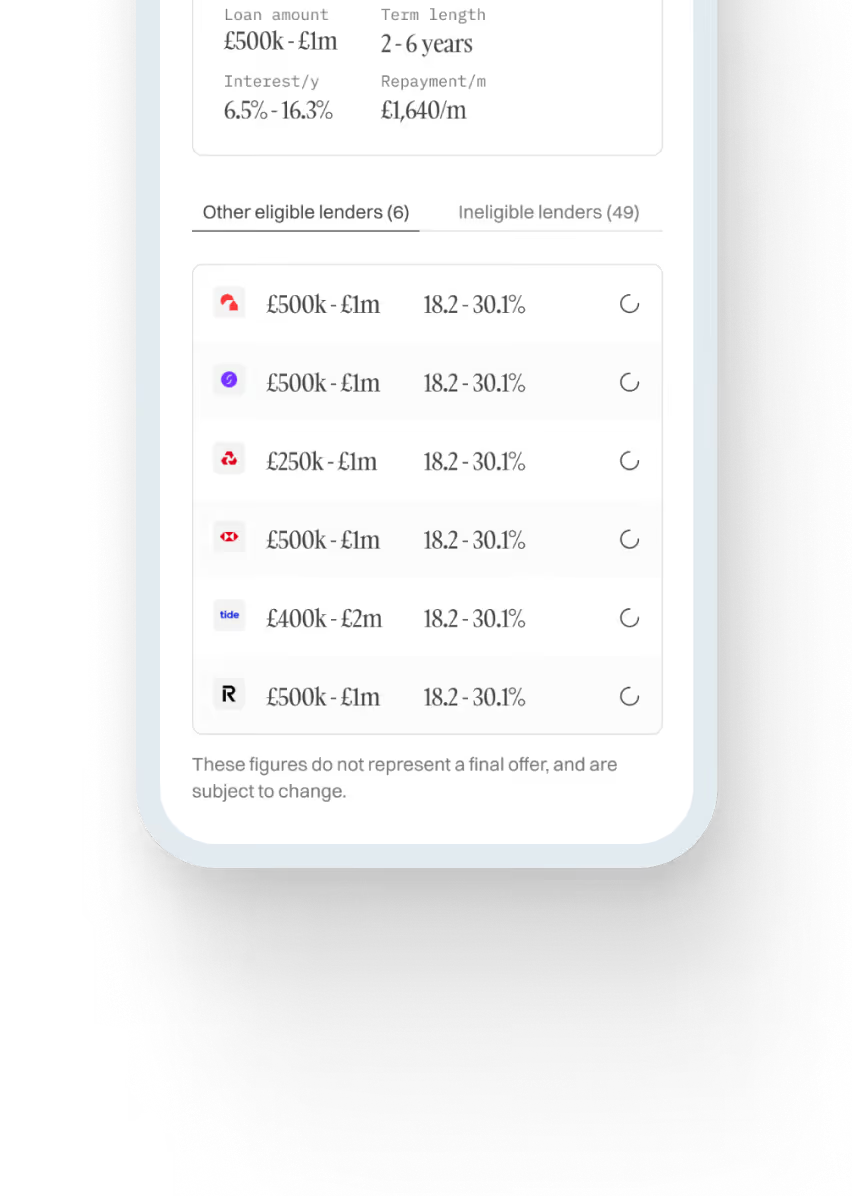
Get matched to lenders
Our LendTech technology will compare over 50 lenders and match you with the most suitable finance options.
Check eligibility now
[3]
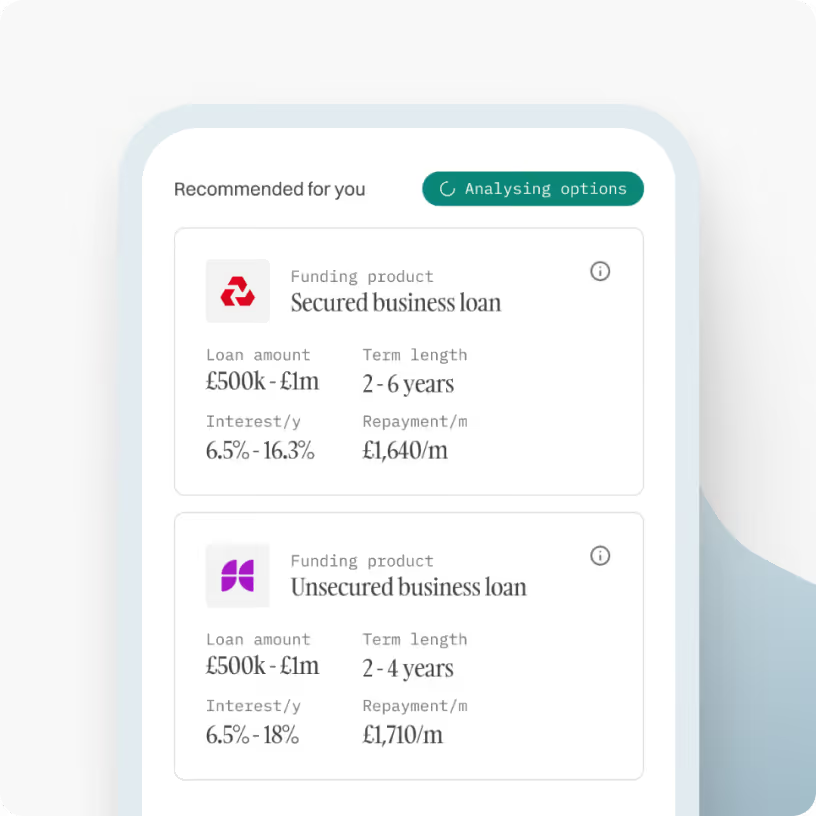
Obtain funding in 48 hours
Once you have fully submitted your proposal, one of our funding specialists will discuss the available options and help get you funded.
Check eligibility now

Frequently asked questions
What are the pros and cons of business overdrafts?
Like any funding option, overdrafts have upsides and limitations.
Pros of business overdrafts
1) Fast access to funds
If you already have an arranged overdraft, you can use it immediately.
2) Flexible usage
You can dip in and out as needed. There’s no separate drawdown process.
3) Helpful for short-term cash flow management
An overdraft can smooth timing gaps without locking you into a long-term loan.
Cons of business overdrafts
1) Not always scalable
Overdraft limits don’t always increase in line with your growth. If your needs expand quickly, you may hit a ceiling.
2) Less predictable than structured facilities
Overdraft terms can change, and limits can be reviewed. A facility that can be reduced or withdrawn may not be ideal if you rely on it.
3) Can become a permanent crutch
If your business is constantly overdrawn, the overdraft stops being a buffer and starts being a baseline. This is often a sign you need a different solution.
4) Costs can add up
Business overdraft interest rates and fees can become expensive if you’re regularly using the facility.
What costs and risks should you be aware of?
If you’re considering a business overdraft option, there are a few important cost and risk factors to weigh up.
interest and fees
Overdraft costs can be straightforward or complex depending on the bank. Interest is typically charged on the amount you’re overdrawn, but some banks also apply account-level fees, arrangement fees or charges for exceeding the agreed limit.
The key question is: How often will you use it? If you’re only using an overdraft occasionally, costs may be manageable. If you’re using it every month, it’s worth comparing it to more structured alternatives with clearer pricing.
Limit reviews and changes
Overdrafts are usually subject to bank review. That means the facility can change based on performance, account conduct or bank appetite. If you’re relying on your overdraft as core working capital, that uncertainty can create risk.
Less control over repayment discipline
Overdrafts don’t come with a fixed repayment plan. That can be helpful. But it can also make it harder to build a habit of reducing the balance. Structured facilities often encourage healthier repayment patterns.
Masking a bigger cash flow issue
If you’re consistently in the overdraft, it may mean you’re under-funded for your trading cycle, particularly if customers pay slowly or you’re growing quickly. In those cases, a more tailored facility may be a better long-term solution.
What are the alternatives to a business overdraft?
If you’re comparing an overdraft for business to other funding options, it helps to focus on what your business actually needs:
- Do you need flexible access to funds month-to-month?
- Do you need a lump sum for a specific purpose?
- Is your cash tied up in invoices or stock?
- Do you want predictable repayments and clearer structure?
Below are common alternatives that can be more scalable or structured, particularly for SMEs with ongoing working capital needs.
Flexible and scalable revolving credit facilities
A revolving facility allows you to draw funds, repay and redraw within an agreed limit. Similar in concept to an overdraft, but often set up as a separate facility with clearer terms and structure. In trade funding, this kind of flexible access can be ideal when supplier payments and inventory needs happen regularly but unpredictably.
Why it can be better than an overdraft:
- Clearer borrowing limits and facility terms
- Often designed to scale with trading performance
- Better for planned working capital, not just emergencies
If you’re frequently asking “should we increase the overdraft?”, it may be a sign a revolving facility is a better fit.
Business loans with clear purpose and clear repayments
A business loan gives you a lump sum with a fixed repayment schedule. It can be ideal when you have a specific goal like buying equipment, funding a project, or investing in growth.
This is where overdraft vs business loan becomes a useful comparison:
If you need a short-term buffer, an overdraft may work.
If you need structured funding for a defined purpose, a loan may be better.
And if speed matters, many modern applications can be processed quickly when the case is straightforward and documents are ready.
Unlock tied-up cash with invoice finance
If your biggest problem is slow-paying customers, invoice finance can help you access funds against invoices you’ve already raised. Turning outstanding receivables into usable working capital.
Why it can be better than an overdraft:
- Directly addresses the root issue e.g. slow payments
- Can grow with your sales ledger
- Improves cash flow without increasing reliance on the bank account overdraft
For businesses with long payment terms, this can be one of the most natural alternatives.
Asset-based lending and trade-linked funding
Some working capital facilities are linked to business assets such as invoices, inventory or equipment, and can scale with asset values. In trade finance, this approach is often used because it matches how businesses buy and sell: stock out, invoices out, cash later.
Why it can be better than an overdraft:
- Aligns funding to assets and trading reality
- Can offer higher limits than a standard overdraft
- Supports growth and larger orders more effectively
Merchant cash advances on card payments
For businesses with regular card sales, revenue-linked funding can offer flexible repayments that move with takings. It can be helpful for short-term needs, especially where speed matters.
Is a business overdraft right for your business?
A business overdraft can be useful. But it works best when it’s used as a buffer, not a foundation.
A business overdraft may be right if:
- You need occasional short-term cover for timing gaps
- Your cash flow is generally stable but sometimes uneven
- You want a simple safety net for unexpected costs
You may want to consider alternatives if:
- You’re in the overdraft most months
- You need funding to buy stock or pay suppliers regularly
- You want a facility that scales with growth
- You need clearer repayment structure and predictability
As a rule of thumb: if your challenge is timing, you want funding that matches your trading cycle. Not a facility that quietly becomes permanent debt in your current account. Trade and working capital solutions exist to support exactly that: purchasing stock, paying suppliers and bridging payment terms. Without putting unnecessary pressure on day-to-day cash flow.
Don’t see your question? Send us a message or call us on 01371870815 to speak to one of our funding specialists quickly.
Compare business funding options today, quickly and easily
Browse our range of business funding options to find out more and discover the one that best suits your business.
Compare funding options
Prefer to chat? Call us on 01371870815 to speak to our experts.


.svg)