Your Business Loan Checklist: What to Prepare Before Applying
By
Aurora Capital
June 29, 2026

.svg)
.svg)
Applying for a business loan can feel like a big step. Whether you want to improve cash flow, buy stock, invest in equipment, refinance existing debt or fund growth, the right preparation can make the process much smoother.
The strongest applications usually have one thing in common: clarity. Lenders want to understand your business, why you need funding and how comfortably you can repay it. If your documents are organised and your funding purpose is clear, you are more likely to avoid delays and find a suitable option.
Our 10-point business loan checklist explains what to prepare before you apply, so you can approach the process with confidence.
1. Be clear on why you need funding
Before you apply for a business loan, start with the purpose.
A lender will want to know what the money will be used for and why now. A clear reason makes your application easier to assess and helps match your business with the right type of funding. Try to be specific. “Working capital” is useful, but “covering supplier payments while waiting for customer invoices to be paid” is much stronger. It shows the lender that you understand the timing gap and have a practical reason for borrowing.
Common reasons for borrowing include:
- Buying stock
- Managing cash flow
- Paying suppliers
- Refurbishing premises
- Purchasing equipment
- Employing staff
- Refinancing debt
- Funding growth
2. Work out how much you need to borrow
Once you know why you need funding, work out how much you actually need.
Borrowing too little may leave you short. Borrowing too much can increase the total cost and create unnecessary repayment pressure. A good starting point is to calculate the exact amount required for the purpose, then build in a sensible buffer where appropriate.
Think about:
- The cost of the project or purchase
- Any fees or deposits involved
- How long the money will be needed
- How repayments will fit alongside other commitments
- Whether the funding need is one-off or ongoing
If your need is short-term and flexible, a revolving credit facility may be more suitable than a fixed loan. If you need to buy equipment, asset finance may be a better fit. If you need a one-off cash injection for a defined purpose, a business loan may work well.
3. Understand what type of loan may fit
Not all business loans work in the same way. Choosing the wrong structure can make funding more expensive or less useful than it needs to be.
Unsecured business loans
An unsecured business loan allows you to borrow without using property or equipment as security. This can be quicker and simpler, although the amount available may be lower than with secured funding. It can be used for many legitimate business purposes, including cash flow, stock purchase, growth, refurbishment and refinancing.
Secured business loans
A secured business loan uses an asset, often property, as security. This can support larger borrowing amounts and longer repayment terms. It may be more suitable for bigger projects, but you need to be comfortable with the risks of securing a loan against an asset.
Asset finance
Asset finance can help you acquire equipment, machinery or vehicles while spreading the cost over time. This can be useful if the funding need is linked to a specific business asset.
Revolving credit
A revolving credit facility can support businesses that need flexible access to funds. You can draw, repay and use the facility again within an agreed limit, which can help with ongoing cash flow gaps.
Invoice finance
If your cash flow pressure is caused by slow-paying customers, invoice finance may help release cash from unpaid invoices.
The right option depends on what you need the money for, how quickly you need it and how your business prefers to repay.
4. Check your credit position
Your credit profile can affect eligibility, cost and the type of funding available.
Before you apply, check your business credit profile and make sure you understand any issues that could raise questions. Some lenders may also look at directors’ personal credit, particularly for smaller businesses or unsecured borrowing.
If there are missed payments, defaults or unusual activity, it is better to understand that before a lender does. You may still have options, but it helps to be upfront and prepared.
You can also improve your position by:
- Paying bills on time
- Keeping bank account conduct clean
- Avoiding unnecessary credit applications
- Making sure business details are up to date
- Reducing unused or expensive debt where possible
5. Gather your financial documents
Missing documents are one of the most common reasons business loan applications slow down.
Before applying, it helps to have your key paperwork ready. The exact requirements depend on the lender and product, but you may be asked for:
- Recent business bank statements
- Latest filed accounts
- Management accounts
- VAT returns
- Profit and loss information
- Cash flow forecasts
- Details of existing borrowing
- Proof of ID and address for directors
- Company registration details
For larger or secured facilities, lenders may ask for more details. For example, they may want information about property, assets, security or an exit strategy if the borrowing is short-term.
Having documents ready does not guarantee approval, but it can help reduce back and forth and keep the process moving.
6. Know your numbers
A lender needs to see that your business can afford the repayments.
Before you apply, make sure you understand the key numbers in your business. This includes turnover, profit, margins, existing debt, regular outgoings and how cash moves through the business month to month.
Be ready to answer questions such as:
- What is your average monthly turnover?
- How consistent is your revenue?
- What existing finance commitments do you have?
- How much headroom do you have after costs?
- How will the loan improve the business?
- What happens if revenue is lower than expected?
You do not need to present a perfect business. But you do need to show that you understand your cash flow and have thought about repayment.
7. Be selective when you apply
It can be tempting to apply to several lenders at once, especially if you want funding quickly. But multiple applications in a short period can create unnecessary credit checks and confusion.
A more strategic approach is to prepare properly, compare suitable options and apply where there is a realistic fit.
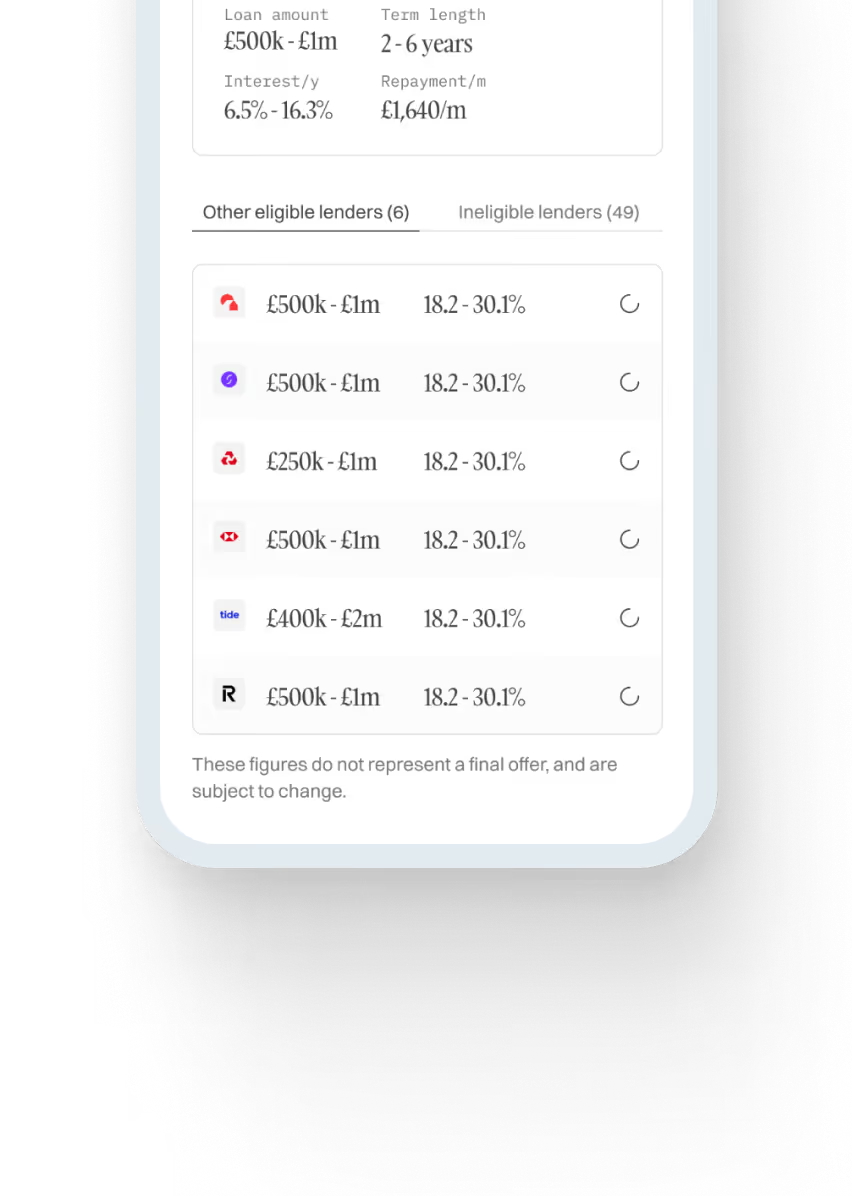
That is where working with a funding specialist can help. Instead of approaching lenders one by one, we can help assess your requirements and compare options across a panel of lenders. This can save time and help you focus on facilities that are more likely to match your needs.
8. Think about cost, not just the headline rate
The interest rate matters, but it is not the only cost to consider.
When comparing business loans, look at:
- The total repayable amount
- Any arrangement or admin fees
- The repayment term
- Monthly repayment size
- Flexibility to repay early
- Whether security or a personal guarantee is required
- How quickly funds can be made available
A lower rate over a longer term may reduce monthly repayments but increase the total cost. A faster unsecured loan may be more expensive than secured borrowing, but it could be the right option if speed matters and the amount is manageable.
The best loan is not always the cheapest on paper. It is the one that fits your business need, cash flow and level of risk.
9. Prepare a short funding summary
A simple funding summary can help you feel more prepared and give lenders a clearer view of your business.
Include:
- How much you want to borrow
- What the funds will be used for
- Why the funding is needed now
- How the loan will support the business
- How you plan to repay it
- Any key documents available
This does not need to be long. A clear page of information can be enough to show that you have thought through the request.
10. Get ready to move quickly
If your application is straightforward and your documents are ready, funding can often move faster than many business owners expect.
The key is preparation. Know what you need, understand your numbers, gather the right documents and choose the funding route that fits the purpose.
Things to remember
A business loan can support growth, ease cash flow pressure and help you move forward with confidence. But the application process is much easier when you are prepared.
Before you apply, be clear on the purpose, the amount, the repayment plan and the type of funding that suits your business. The more complete your application is, the easier it is for lenders to assess your case and the faster you can understand your options.
If you are considering a business loan, our team can help you compare suitable funding options and understand what may be available for your business.
Get a free, no obligation quote
Apply in minutes, there’s no impact on your credit score and you’ll get a free, no obligation personalised quote in hours. Regulated by the FCA: 831395
How much would you like to borrow?
Thank you! Your submission has been received!
Oops! Something went wrong while submitting the form.
Prefer to talk? Call us on 01371870815
How the process works
[1]
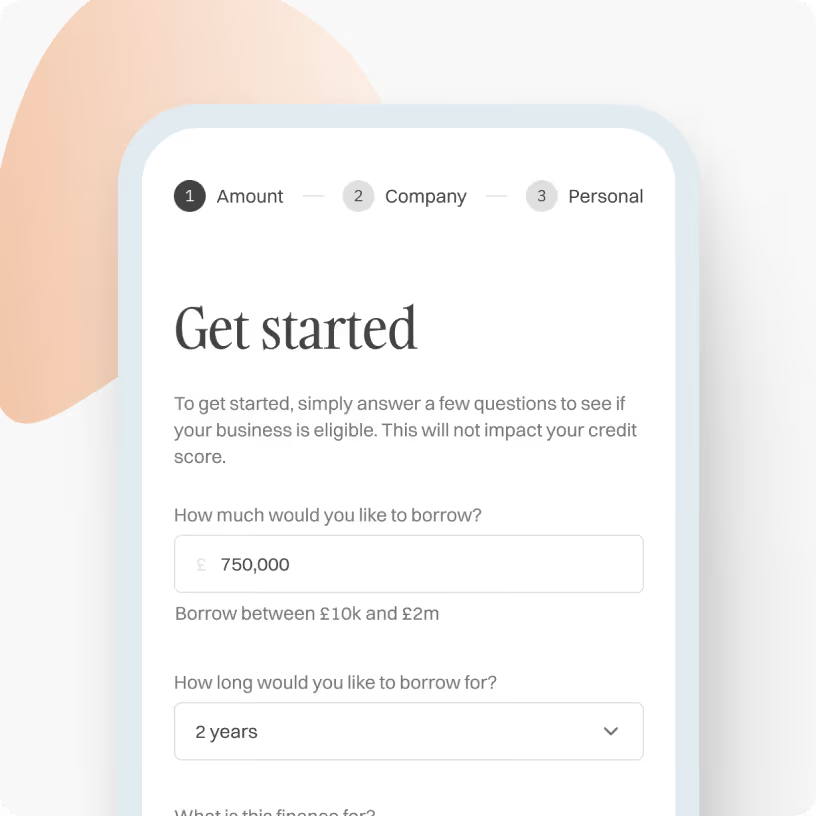
Enquire and check eligibility
Enquire in under 30 seconds to find out if your business is eligible for funding. We only need basic information about your business.
Check eligibility now
[2]
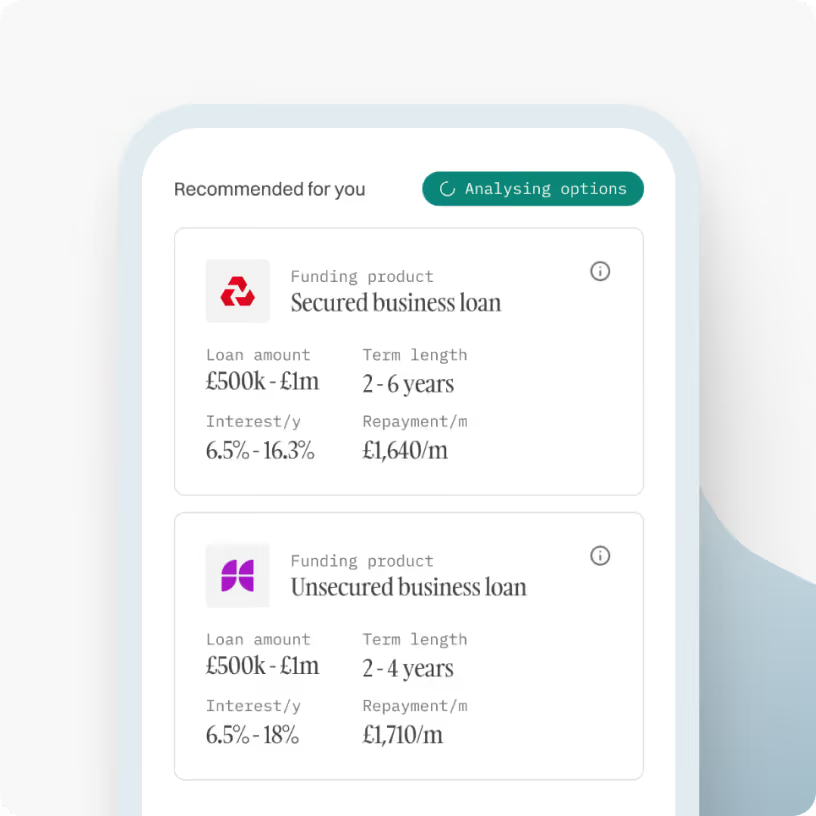
Get matched to lenders
Our LendTech technology will compare over 50 lenders and match you with the most suitable finance options.
Check eligibility now
[3]
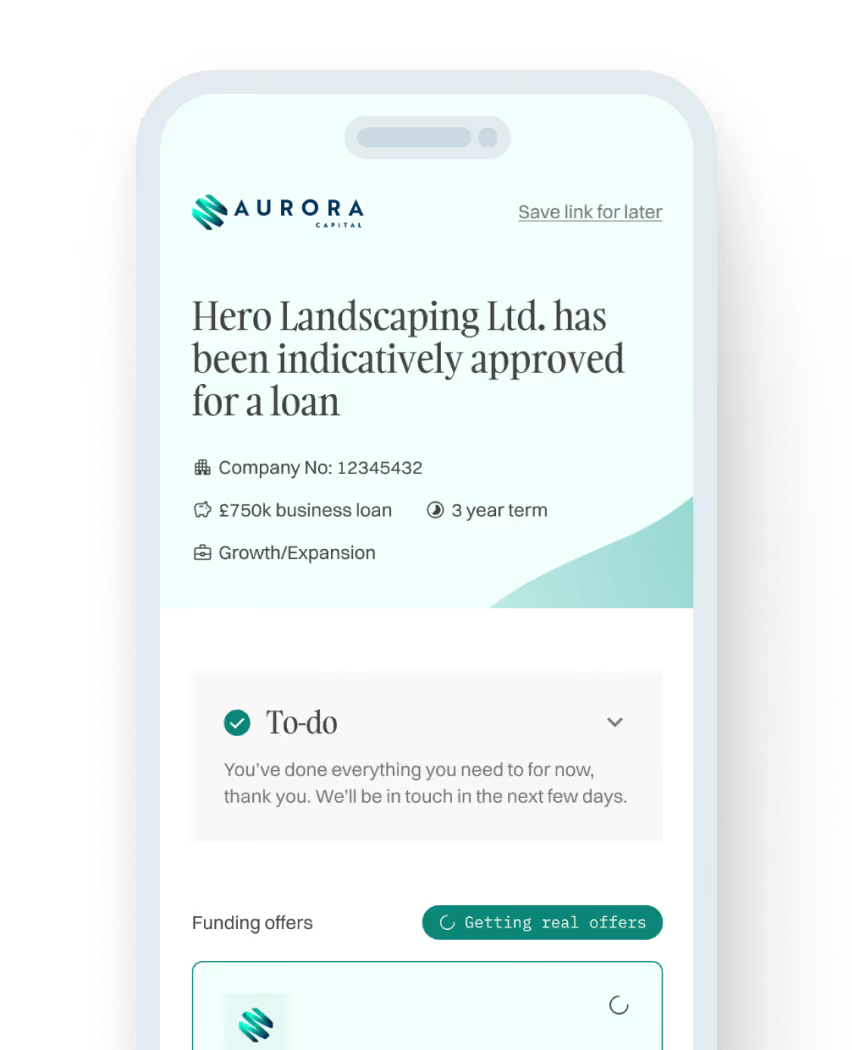
Obtain funding in 48 hours
Once you have fully submitted your proposal, one of our funding specialists will discuss the available options and help get you funded.
Check eligibility now

Compare business funding options today, quickly and easily
Browse our range of business funding options to find out more and discover the one that best suits your business.
Compare funding options
Prefer to chat? Call us on 01371870815 to speak to our experts.

.svg)